
Planning a Corporate Retreat in 2026: Start From Proven Itineraries Instead of a Blank Page
Corporate retreats work best when you don't start from scratch. How to scope one in 2026 and begin from proven itineraries planners have already delivered.
By The TripEngine Team
Planning a Corporate Retreat in 2026: Start From Proven Itineraries Instead of a Blank Page
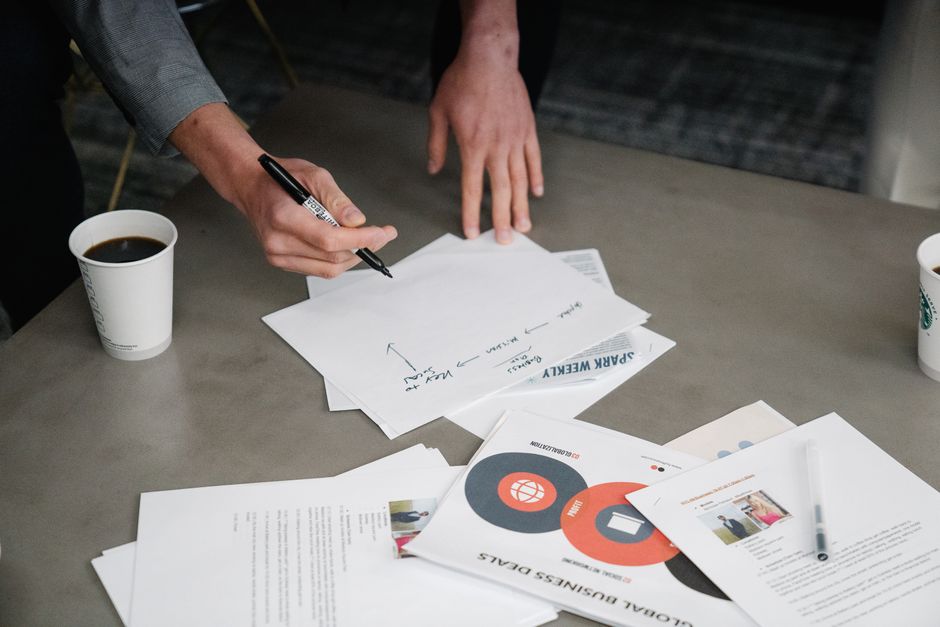
Photo via Pexels
Most corporate retreats still begin the same way: someone is handed the trip on top of their real job, opens a blank document, and starts searching. From there it usually becomes a request-for-proposal cycle, describing what you want to several planners, waiting for proposals, and comparing documents that are hard to compare. TripEngine is built to change where that process starts. It is a marketplace where professional planners publish proven, customizable itinerary templates that organizers can discover, then customize directly with the planner who created them. Instead of starting from scratch, you start from work that has already been designed, tested, and delivered.
This guide walks through why retreats are worth doing well, where the traditional planning process breaks down, and how to approach a 2026 retreat with more confidence and less guesswork.
Why Corporate Retreats Are Worth Doing Well
The case for bringing a team together in person has grown stronger as more work has moved remote and hybrid. A well-run retreat gives distributed teams a rare chance to build the trust that video calls rarely produce, aligns people around goals that are easy to lose in day-to-day execution, and marks moments that matter, like a milestone, a reorganization, or a year's worth of results.
The broader business case is well documented, even if the research is rarely retreat-specific. Gallup's Q12 meta-analysis, drawn from millions of employees, finds that work teams in the top quartile of engagement outperform the bottom quartile by 23% in profitability and 18% in productivity, with markedly lower turnover (Gallup, 2024). Separately, a 2025 study covering 24 years of data found U.S. companies earned about $14.60 in net operating margin for every $1 spent on business travel (GBTA, 2025). Neither figure is a promise about any single retreat, and neither is a TripEngine result. They describe the categories a retreat sits inside, employee engagement and business travel, and a well-run retreat is one of the ways teams invest in the connection and alignment behind numbers like those.
The organizers who own these programs feel the stakes directly. The trip is usually additional to their actual role, the outcome is visible to colleagues and executives, and there is rarely a reliable way to know what a successful version of this particular trip should look like. That uncertainty, more than budget, is what makes retreat planning hard. Starting from a program that has already worked for a similar group is one of the most effective ways to reduce it.
Where the Traditional Planning Process Breaks Down
For an organizer who is not a professional planner, the workflow tends to look like this. You are assigned the trip with little notice. You search the internet for ideas and quickly become overwhelmed. You ask peers what they did last year. You collect a few planner or venue names through referrals, write an RFP or a long descriptive email, wait for proposals, and then make a high-stakes decision from documents that do not line up neatly against each other.
Two moments carry most of the risk: the blank page at the start, and the unfamiliar judgment call at the end. You are asked to produce a confident decision about something you may have never done before. Meanwhile, a program very much like the one you need has almost certainly already been designed and delivered, just by a planner you have no practical way to find. The proven work exists. There has simply been no efficient way to discover it, unless you happen to already work with the planner who created it.
How the TripEngine Model Works
TripEngine is a marketplace for professionally planned group travel. Rather than beginning with an RFP, an organizer begins with itinerary templates that professional planners have already designed and delivered. You discover experiences that fit your objectives, connect with the planner who created the one that resonates, and customize it together for your dates, budget, and group.
The starting point is the trip, not the planner, and that distinction is the whole point. Working the traditional way, an organizer is limited to the programs whichever planner they happen to know has personally designed. On TripEngine, they discover proven work created across many planners, and the planner who designed the one that fits comes with it. The value is the reach: access to experiences that already exist and fit the objective, well beyond what any single relationship would ever surface.
Two things stay deliberately true to how good group travel already works. The planner who designed the experience is the planner you work with, so expertise stays human and the relationship stays direct. And every itinerary remains fully customizable, because no two groups are identical. The goal is not to replace planners or automate the relationship. It is to make proven expertise discoverable to the organizers who need it, so a new program does not have to start from zero.

Photo via Pexels
What Starting From Proven Work Looks Like in Practice
Consider a distributed team of roughly sixty people that has never all been in one place. The objective is a two-and-a-half-day offsite that mixes real strategy sessions with time to build relationships, without turning into either a conference or a vacation.
Starting from a blank page, that organizer faces weeks of research and a decision they are not equipped to second-guess. Starting from a proven itinerary template, they begin with a program a planner has already run for a group of similar size and purpose: a venue that fits, a rhythm of working sessions and shared meals that has held up in practice, and the logistics already thought through. From there the work is customization, adjusting the agenda, the destination, and the details with the planner who designed it, rather than invention. The starting point is stronger, and the judgment call at the end is far less lonely.
(This is an illustrative example of how the model is meant to help, not an account of a specific customer program.)
A Practical Framework for Scoping Your Retreat
A few decisions shape everything else. Getting rough answers to them early makes every later conversation, including one with a planner, more productive.
Purpose. Decide what the retreat is actually for before you think about where it goes. Strategy alignment, team building after rapid growth, celebrating a milestone, and integrating teams after a reorganization each point toward very different programs.
Group and complexity. The size of the group and the mix of objectives determine how much professional help the trip genuinely warrants. Small, simple gatherings may not need much. Larger groups, multiple goals, or meaningful budgets usually do.
Rough budget. Per-person cost varies widely by destination, season, and the kind of experience you want, so treat any range as a planning starting point rather than a quote. As a rough orientation, domestic city-based retreats often land at the lower end of the spectrum, lodge and resort programs in the middle, and international or highly customized experiences at the higher end. A planner can give you a real number quickly once the purpose and group are defined.
Timing. Larger and more complex programs need more lead time, and popular destinations book up further out. A common rule of thumb is to start earlier than feels necessary, especially for big groups or peak seasons, because compressed timelines are usually self-inflicted by late approvals rather than by the work itself.

Photo via Pexels
Trends Shaping Corporate Retreats in 2026
Several themes come up repeatedly in how teams are approaching retreats this year: purpose-driven programming that ties the gathering to a cause or a genuine outcome, a stronger emphasis on wellbeing, skill-building sessions built into the agenda, shorter and more frequent micro-retreats, sustainability, and place-based experiences that use the destination rather than treating it as a backdrop. Artificial intelligence is showing up too, mostly as a way to speed up discovery and planning rather than to replace the people who design and run these programs.
What these trends share is a move away from generic, off-the-shelf trips and toward experiences designed with intent. That is exactly the case for starting from a planner's proven work: the specialization is already built in, and you customize from a strong foundation instead of assembling one from nothing.
Frequently Asked Questions
What is TripEngine and how does it work for corporate retreats?
TripEngine is a marketplace for professionally planned group travel. Professional planners publish proven, customizable itinerary templates; organizers discover the ones that fit their objectives, connect with the planner who created them, and customize the experience together. The aim is to give organizers a stronger starting point than a blank page or an RFP.
How much does a corporate retreat cost?
It varies widely based on destination, season, group size, duration, and the kind of experience you want, so any figure is best treated as a rough planning input rather than a quote. City-based domestic retreats tend to sit at the lower end, lodge and resort programs in the middle, and international or highly customized experiences higher. The fastest way to a real number is to define the purpose and group first, then talk to a planner.
How far in advance should I plan a corporate retreat?
Generally, the larger and more complex the program, the more lead time you need, and popular destinations fill up further out. For big groups or peak seasons, plan well ahead. The most common cause of a rushed retreat is a late internal approval, not the planning itself, so it helps to lock the decision to move forward early.
Are corporate retreats worth the investment?
For most teams with a clear purpose, a well-run retreat is one of the more effective ways to build trust, align on goals, and mark moments that matter, especially for distributed teams that rarely meet in person. The wider categories a retreat belongs to are well studied: Gallup links top-quartile engagement to 23% higher profitability than the bottom quartile (Gallup, 2024), and a 2025 GBTA analysis found about $14.60 in net operating margin per $1 spent on business travel (GBTA, 2025). A retreat is one lever on those outcomes rather than a guarantee of them, and the return depends heavily on how well the program fits the group. That is the main argument for starting from an experience that has already worked rather than an untested one.
Do I still work with a real planner, or is it automated?
You work with a real planner. On TripEngine, the person who designed the itinerary is the person you customize it with. Technology helps you discover the right experience faster; the expertise, design, and delivery stay human.
Getting Started
Planning a group experience will always involve real decisions and real trade-offs. The change TripEngine is after is simply where you begin: with proven work created by professionals, discoverable before you commit to a direction, rather than a blank page and a stack of proposals to compare. If you are scoping a 2026 retreat, define the purpose and the group first, then start from experiences that already fit. You can explore the marketplace at tripengine.net.